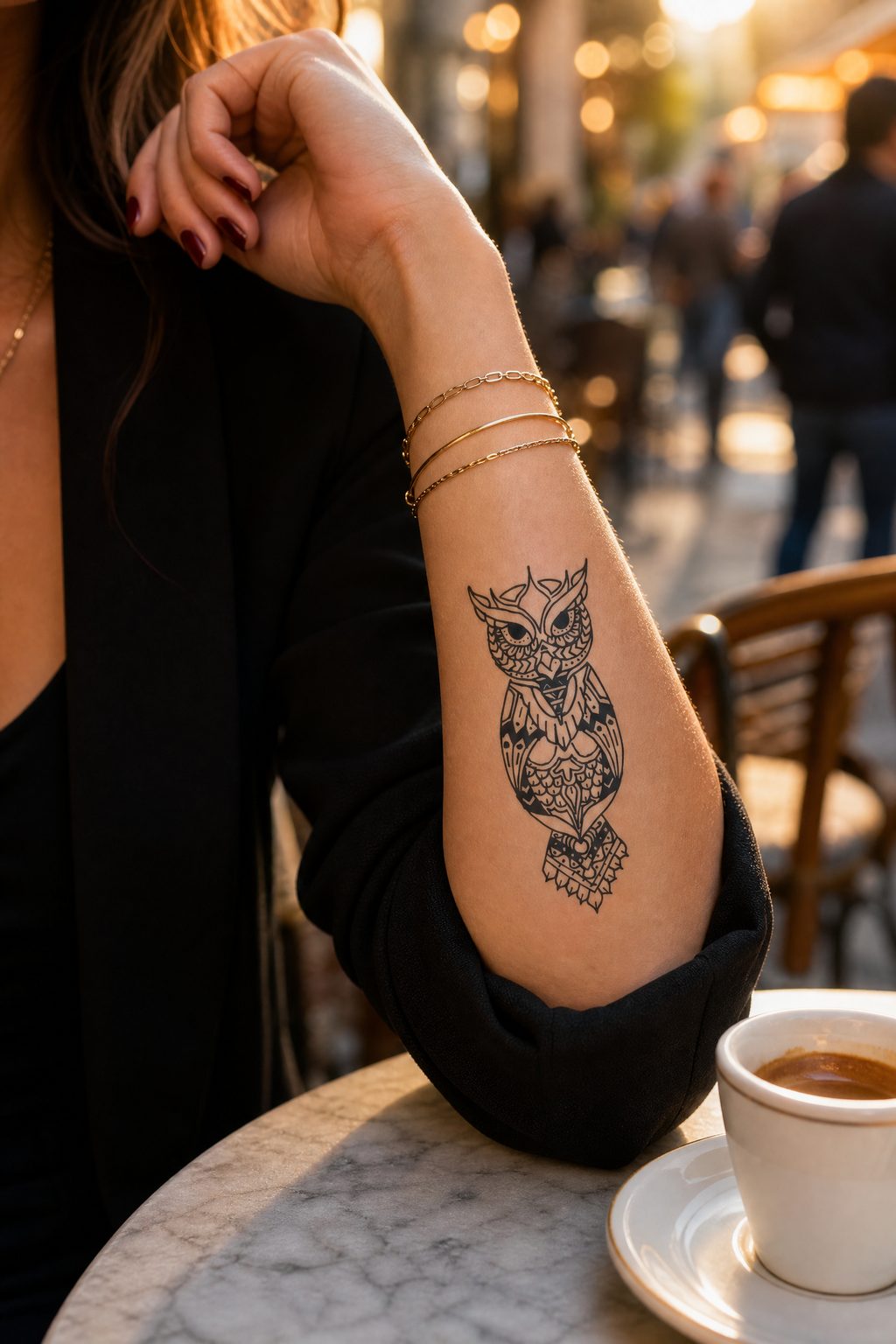

A bird tattoo is linked, in most cultural interpretations passed down over time, to the idea of freedom and unrestricted movement, but its exact meaning changes depending on how many birds you choose, the species, and the elements that accompany them in the design. A single bird in flight usually tells the story of a moment or a personal decision, while a flock suggests collective movement and a shared direction. If the bird you choose is a dove or a swallow, its meaning is tied to cultural histories far older than the tattoo itself, and these can also guide your choice of placement on your body.
- A single bird emphasizes a moment or a personal decision, while a flock speaks of collective movement and mutual support.
- The dove has historically been linked to peace and, when shown alongside other elements, to hope or faith; the swallow carries its own tradition of returning home.
- The design’s shape influences its placement: a small bird works on the wrist or ankle, while a sequence of birds naturally follows the curve of the collarbone or forearm.
What a bird tattoo generally means
The ability to fly makes birds a natural symbol of freedom and overcoming limits, an idea that recurs across different cultures, not just in Western tradition. In ancient Egypt, the Bennu bird was understood as a sign of cyclical renewal; in Greece, the owl was associated with Athena; and in Norse mythology, the ravens Huginn and Muninn accompanied Odin as messengers between the earthly and divine worlds (source: Birds in Ancient Cultures: From Myths to Symbolism). These meanings are cultural and historical associations passed down over time, not scientific claims or interpretations that apply to everyone who sees the tattoo, and choosing a particular symbol remains, ultimately, a personal decision. The same idea of a messenger between worlds also explains why designs featuring several birds, rather than just one, often appear in tattoos associated with a journey or the transition to a new stage in life, where movement as a group expresses change better than a single, isolated flight.
Flocks in flight: what several birds together mean
When you see large migratory birds, such as geese, flying in a V formation, it is more than just a pleasing image: the bird behind uses the rising air current created by the one in front and expends up to 10-14% less energy than it would flying alone, a saving also confirmed in pelicans, where it reaches around 11% (source: Why Do Birds Fly in a V Formation?). Symbolically, such a group is often read as collective movement in the same direction or as mutual support, in contrast to a single bird, which emphasizes an individual moment instead.
Why a sequence of birds works on the collarbone or wrist
Visually, a sequence of three or four birds works as a line that can follow the body’s contours, which is why it often appears on elongated areas such as the collarbone or forearm. On the collarbone, the silhouettes can gradually get smaller toward the shoulder, following the curve of the bone, while a more compact version with two or three birds remains legible even at a glance on the wrist.

The dove: peace, hope, and other old meanings
The dove’s association with peace is an old one, with roots in several traditions: in the biblical account of Noah’s Ark, the dove returns with an olive branch as a sign that the waters have receded, while in Greek mythology the bird was associated with Aphrodite, the goddess of love (source: Why Doves are the Symbol of Peace and Other Dove Facts).
When a dove appears alongside other elements—a branch, an anchor, or a symbol of faith—its meaning becomes more specific: we are no longer talking only about peace in general, but about hope, stability, or faith, depending on the composition. The Hope design in the collection illustrates exactly this: a flying dove appears alongside roses and an anchor, and the combination shifts the emphasis from general peace toward the idea of hope and stability.

These descriptions reflect the designer’s stated intention for a particular design, not an interpretation that every viewer will automatically recognize; someone who sees the tattoo on the street may just as easily read it as a beautiful bird, without knowing the symbolic history behind it.
Swallow, eagle, owl: species with their own symbolism
The swallow has its own history, tied to sailors’ tradition: conventionally, the tattoo was earned after the first 5,000 nautical miles traveled at sea, precisely because this bird migrates over long distances and consistently returns home, an idea sailors identified with in relation to their own return (source: Swallow Tattoos and Sailors). If the swallow is the main reason you’re looking for a bird tattoo, the dedicated guide to the meaning of swallow tattoos goes into much more detail than this article can.
The eagle and owl have their own guides, too: the symbolism of the eagle is linked to power and keen eyesight, while the meaning of the owl is linked to wisdom and instinct. Each species carries its own history, and choosing between them often has more to do with what you want to communicate than with how “suitable” a bird seems for a tattoo. If you want the exact meaning to be recognized by someone looking at the design, a species with a clear story—a swallow, eagle, or owl—communicates more precisely than a generic composition; if you simply prefer an image you like, a flock in flight or a dove works just as well without needing any further explanation.
Where a bird tattoo works well
The choice between a single bird and a flock translates directly into placement options, and the size of the area you choose matters just as much as the design itself.
- A single small bird works well on the wrist or ankle, where a subtle detail makes an impact without taking up much space.
- A sequence of three to five birds naturally follows the curve of the collarbone or forearm, keeping the design legible even from a distance.
- A larger flock, with birds of different sizes, needs a bigger area—such as the ribs or back—so it doesn’t look crowded.
A bird on the inside of the wrist or on the ankle is easy to cover with a bracelet or a longer sock, while a sequence extending across the collarbone remains visible with most summer outfits, a detail to consider if you want a more discreet design at the office.
Why it’s worth trying the design before you decide
A temporary or semi-permanent design shows you what the chosen size, shape, and placement look like on your own skin, without suggesting anything about how a permanent tattoo with the same design would feel or heal; on this topic, it’s also worth reading about the broader reason why a visual test makes sense before making a permanent decision.
For example, you can directly compare how a flock of swallows in flight looks with a single dove and roses before moving closer to a final version. If the idea of freedom appeals to you more than the bird itself, the broader overview of symbols of freedom presents birds alongside other motifs with a similar meaning.
The bird design collection brings together options ranging from flocks in flight to dove compositions, making it useful for a quick comparison of styles and placements before you choose what you want to wear.