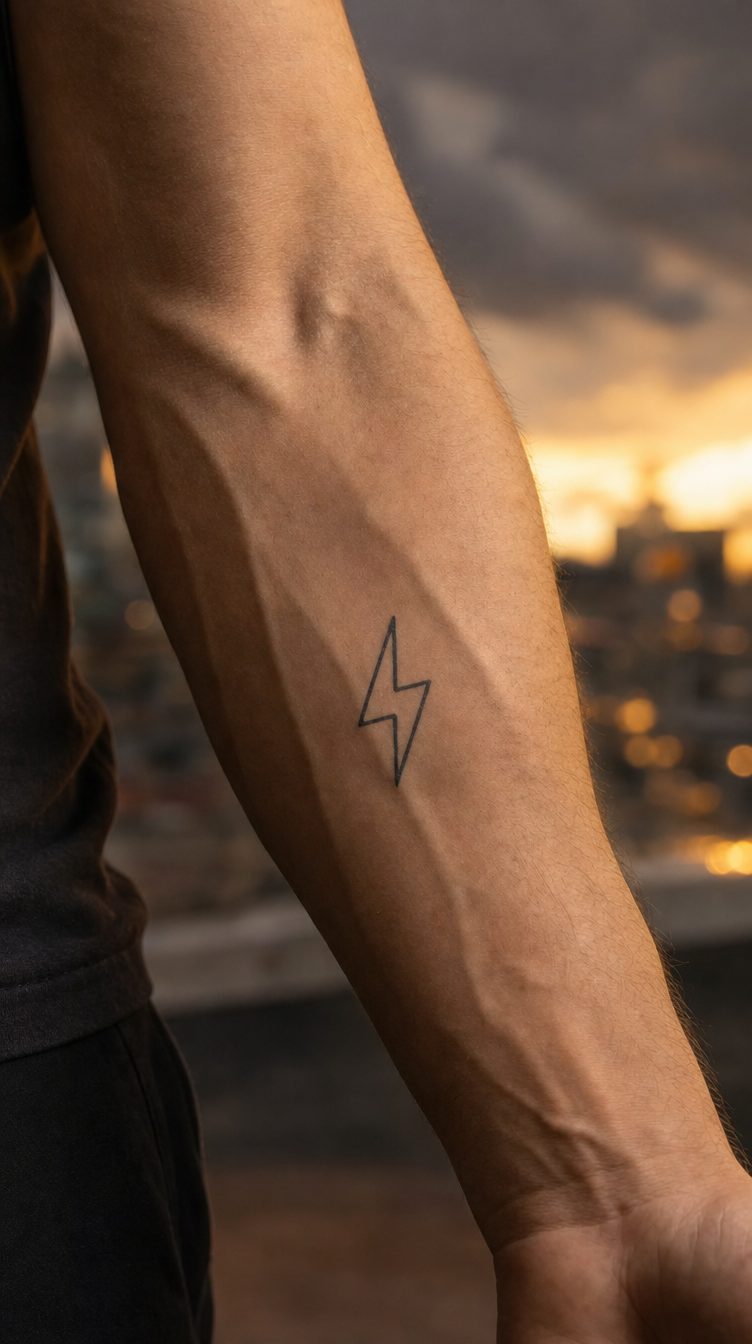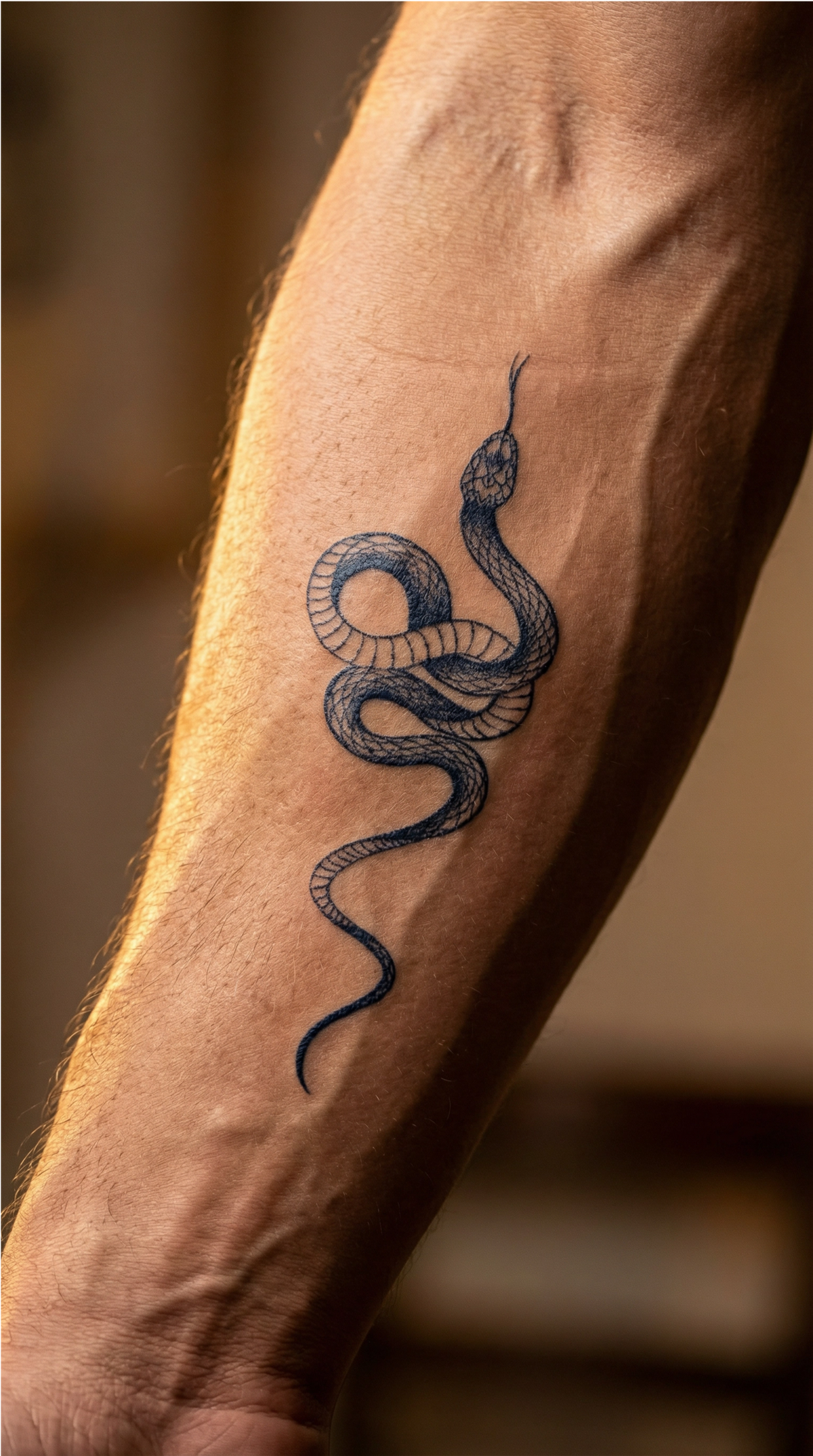

A tattoo on the side of the hand sits along the outer edge of the palm, the narrow strip between the wrist and the base of the little finger. This area follows a natural, elongated curve, which is why it works best with slim designs—fine lettering, a discreet vine or a symbol drawn in one continuous line—and less well with wide designs or ones packed with tiny details. Because it’s an area you use constantly, with clothes rubbing against it and frequent handwashing, any design there, temporary or permanent, generally fades more noticeably than it would on a protected area such as the arm or thigh.
- The area suits long, slim designs: fine lettering, a short word, a vine or a symbol drawn in one continuous line.
- Wide designs or ones with lots of tiny details tend to distort over the bony curve along the edge of the hand.
- Daily friction speeds up fading for both temporary and semi-permanent tattoos, and pigment migration remains a real factor even with a permanent tattoo over the very long term.
- The area is well suited to testing a design for a few days before making a permanent decision.
What a tattoo on the side of the hand actually means
The side edge of the hand is the fleshy, bony area between the wrist and the base of the little finger—the area you notice, for example, when you hold your hand in a “karate-chop” position or rest it on the edge of a table. It’s a natural, slightly curved line that stretches for a few centimetres without being very wide.
With your hand relaxed by your side, the area remains mostly hidden by the position of your hand; it becomes visible mainly when your hand moves, gestures or rests on a surface. This control over visibility is one reason many people choose this exact placement, especially for a first, discreet design.
Because of its elongated shape and bony curve, the area suits long, slim designs and is less suited to wide, round designs or those with lots of tiny details, which tend to look distorted on such a narrow surface. If you want to see all the possible options for hand placement, not just the side, the general guide to temporary hand tattoos also covers the wrist, fingers and back of the hand, with different types of designs from the ones discussed here.
Styles that work well with this curve
Three style families make good use of this area’s shape, and the choice between them largely depends on how discreet or visible you want the result to be and how many details can fit naturally on such a narrow surface.
Fine lettering and short words
A short word, an initial or a date in fine lettering follows the length of the area without crowding it. To keep the letters legible on a narrow surface, a simple font without too many flourishes usually works better than highly elaborate calligraphy, especially if the text has more than four or five letters.
Vine and branch designs
Vine or slender branch motifs follow the linear path along the edge of the hand almost naturally, because they’re already designed as a continuous line that can curve gently. Tree of Life is an example from this style family—a fine-line design with slender branches that shows what a discreet vine looks like on an elongated area like this.

Single-line symbols
A small symbol drawn in one unbroken line remains legible even at a reduced size, which matters in an area with limited space. Infinite works well as an example in this category: its simple, single-line shape doesn’t get lost visually even at a smaller size, unlike a symbol with lots of loops or shading.
Very wide designs, ones with lots of shading or ones with tiny, crowded details tend to distort over the bony curve of the area and lose clarity sooner than a simple linear design. If you prefer a bolder look or larger designs on the back of the hand or fingers, the guide to hand tattoos for men covers that exact option, with a different audience and style from the fine lettering discussed here.
How quickly a design fades on the side of the hand
InkLabs semi-permanent tattoos last up to 15 days as standard, but high-friction areas—the hands, fingers and wrists—generally fade faster than low-friction areas such as the arm or an ankle covered by a shoe. The side of the hand falls into this exact category: it’s an area you wash, rub against clothes and rest on surfaces dozens of times a day, so a design there tends to fade noticeably sooner than the average for that area. The factors that affect how long it lasts are explained in detail in the guide to how long a semi-permanent tattoo lasts.
Fading is a gradual process, not a sudden one. The colour of an InkLabs semi-permanent design starts out lighter immediately after application and reaches its final shade only after 24-36 hours; from there, the pigment wears away gradually as the skin naturally renews itself, rather than disappearing all at once in a single day. The full process is explained in the InkLabs guide to what semi-permanent tattoos are.
The same honesty about fading is worth keeping when the discussion turns to permanent tattoos, even though the mechanism is different. According to the U.S. Food and Drug Administration (FDA), the pigment in a permanent tattoo can migrate over time beyond the original application site, and complete removal is a difficult, lengthy and costly process; removal without any trace sometimes remains impossible (source: FDA, Tattoos & Permanent Makeup Fact Sheet). Over decades, pigment tends to migrate deeper into the dermis, which partly explains why old tattoos lose clarity in their fine details (source: Wikipedia, the article about tattoos). How quickly and how visibly this happens on a particular person’s hand depends on individual factors, from skin type to sun exposure, so no article can promise an exact outcome for your case in advance.
Precisely because it’s an area that gets a lot of use and is exposed daily, the side of the hand is a good place to wear a temporary or semi-permanent design first and only then decide whether you want the same design permanently.
How to test a design before making a permanent decision
You can wear one or two different designs on the side of your hand in turn, for a few days each, to compare the length of the line, the thickness of the stroke and how visible the design remains when your hand moves or rests on a surface. If you often wear a ring or a watch, also check how the design looks next to those pieces, because the visible angle of the area changes between when your hand is relaxed and when it’s resting or extended.
This kind of testing gives you a realistic idea of the placement, size and how the line follows the curve of your hand, but it doesn’t simulate the pain, healing process or exact appearance of a permanent tattoo in the same spot; for those aspects, speaking with a licensed tattoo artist remains a necessary step before making a final decision. You can choose one or two designs from the InkLabs temporary hand tattoo collection and wear them for a few days before deciding; for general guidance on choosing a first design and placement, the guide to your first tattoo complements this step.
Frequently asked questions about tattoos on the side of the hand
Here are a few brief answers to the questions that come up most often when someone is considering this area.
Will the tattoo show at the office or during interviews? It depends largely on the position of your hand. With your hand relaxed by your side or in your lap, the side edge generally remains hidden; it becomes visible when your hand moves, gestures or rests on a table. Many people choose this exact area for the control it offers over visibility during the day.
Can it be combined with a design on the wrist or a finger? Yes, and the result usually looks more coherent if you think of the two placements as a whole from the start—for example, a vine that starts on the wrist and continues discreetly towards the side of the hand—rather than adding the second design at random later. If you want the same identical design on both hands, rather than a continuation on just one hand, the guide to symmetrical tattoos explains how to choose a design that works the same way on both sides.
Does it last as long as a tattoo on other areas of the hand or arm? No, generally not. As explained above, friction and frequent handwashing speed up fading compared with areas such as the forearm or an ankle covered by a shoe, whether the design is temporary or semi-permanent.
Overall, the side of the hand rewards a simple, well-considered design—fine lettering, a discreet vine or a symbol drawn in one continuous line—more than a design packed with details. And precisely because it’s an area that’s exposed and gets a lot of use every day, it’s worth wearing a temporary or semi-permanent version for a few days first, to see how it behaves on your moving hand, before making any final decision.