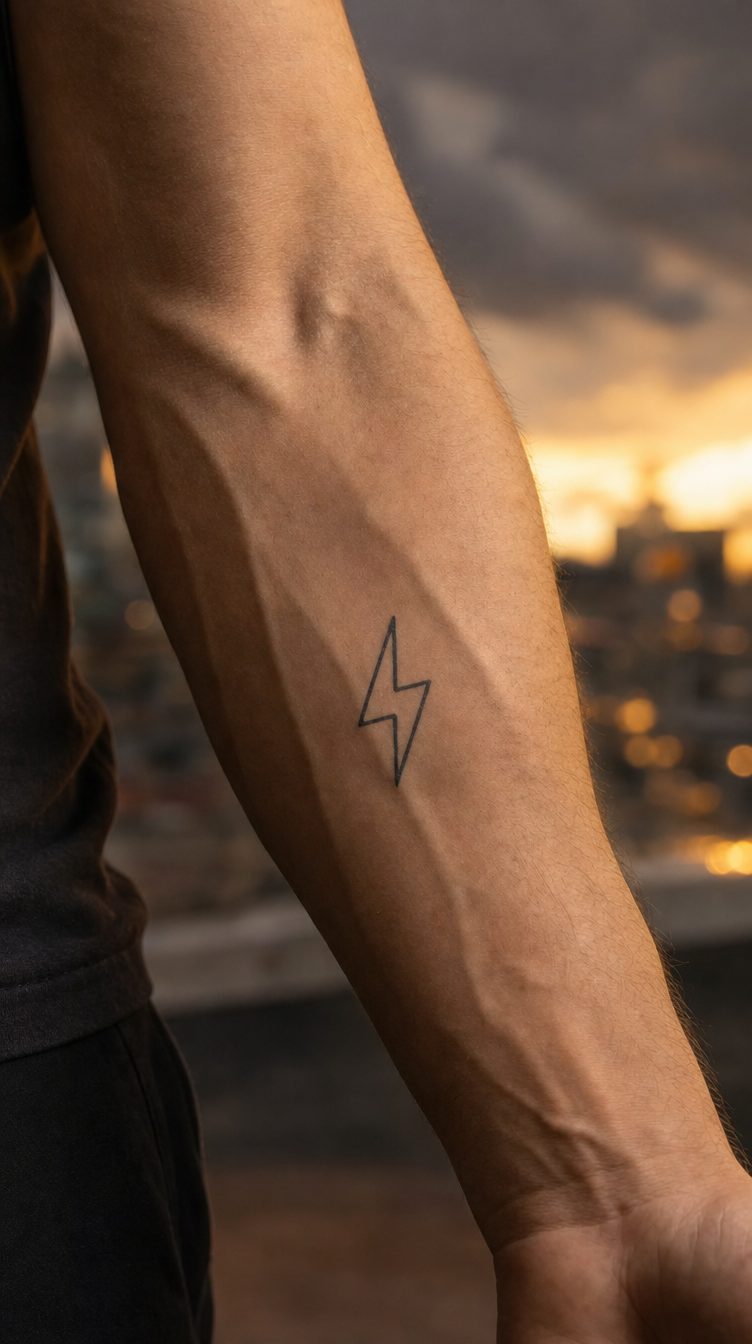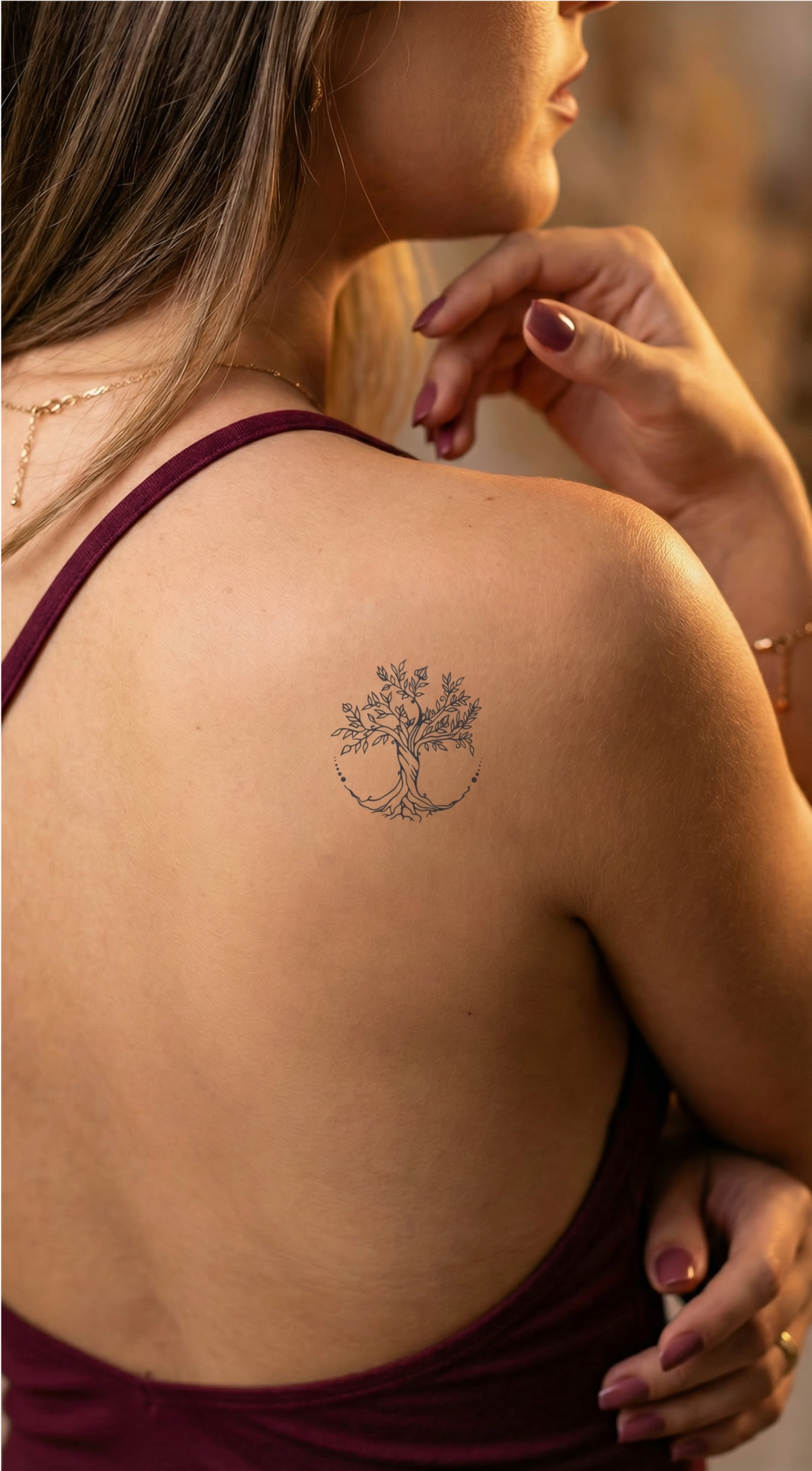

A hand tattoo for a man is first and foremost a choice of scale: a bold design that visibly covers the back of the hand, or a small design created specifically for a finger or the wrist area. The two options behave differently over time because the hand is one of the parts of the body most exposed to friction and frequent washing, which directly affects how long the design lasts and how it looks after the first few days.
- The back of the hand has ordinary skin, suitable for a bold design with thick outlines and clear shapes, while fingers and the wrist call for small, simple designs.
- On the hand, a design fades faster than on the arm or ankle because the area is constantly washed and rubbed.
- It’s worth thinking realistically about visibility at work before choosing your hand, bearing in mind that rules vary widely from one workplace to another.
- A semi-permanent option lets you see exactly how colleagues, clients, or family react to a hand design before you make any decision about a permanent tattoo.
Why the back of the hand and fingers are different areas for a tattoo
Hands and fingers are among the parts of the body exposed to the most friction and washed most often during an ordinary day, which is why a design placed there fades faster than the same design on the arm or ankle. Frequent washing with hot water, rubbing with a towel, and tight accessories around the wrist speed up the process, while keeping the skin around the design properly moisturized helps it last longer.
The difference between the two areas also comes down to skin structure, not just how often you wash them. The back of the hand has ordinary, hair-bearing skin, like the rest of the body, which makes it suitable for a bold graphic design. The palm and the inner sides of the fingers, on the other hand, have glabrous skin, without hair, with an additional layer and their own ridges—a structure different from that of the rest of the skin (source: Human skin, Wikipedia). For this reason, bold designs with larger areas of coverage are placed on the back of the hand and the visible part of the fingers, not on the inner side.
A centerpiece design on the back of the hand: how to choose a bold design
For a centerpiece design on the back of the hand, the outline matters more than fine detail. It’s a small area that’s constantly moving and on display, so a design with thick lines and clearly defined shapes reads well from a distance, while a design with lots of tiny details tends to get lost visually even before it starts to fade.

If you prefer a theme with symbolism rather than a purely graphic motif, the Infinitum design, with an infinity line joined to an arrow, works just as well at the scale of the back of the hand as it does smaller, on a finger. It’s still worth viewing this strictly as a placement exercise: seeing the outline on the back of your hand for a few days doesn’t tell you how the same theme would work as a permanent tattoo, how long the application process would take, or what your skin would look like after healing. It only tells you whether you like the design, its size, and its exact position.
Small designs for fingers and the wrist: how much room is there for letters and symbols?
On a finger or the wrist, there’s little space available, and the area moves often as fingers bend and come into constant contact with objects, so a simple symbol with few lines works much better than a busy design. A geometric design reduced to its essentials or a fine-line solar symbol stays clear even at just a few millimeters.

How visible is a small finger design during the day?
A small design on a finger is visible whenever you use that hand, unlike a piece on the forearm, which can stay covered by a sleeve. For someone who wants something discreet but still visible at certain moments, such as when shaking someone’s hand or writing, a small symbol on the side of a finger is a practical choice. If, instead, you want a word or a letter written on a finger or the wrist, choosing the font and how the letter sits along the curve of the finger are separate decisions, covered specifically in the guide to hand and forearm lettering tattoos.
How long does a semi-permanent hand tattoo last, and how do you care for it?
After application, the ink starts out lighter and gradually darkens to a blue-black shade over the first 24-36 hours as it reacts with the skin; a design normally lasts up to about 15 days, until it comes off along with the layer of dead skin. On the hand, it tends to last less than average precisely because of the friction and repeated washing described above, while the article on the factors that affect how long a semi-permanent tattoo lasts goes into detail about all the elements that matter, not just those specific to the hand.
When it comes to aftercare, the basic idea is not to force exfoliation of the skin around the design and to avoid very hot water directly on it, especially immediately after application. Keeping the skin around the design moisturized, without applying oils or abrasive products directly over it, helps the outline stay clear for longer.
InkLabs ink is plant-based and dermatologically tested in accordance with cosmetic requirements, and is suitable for most skin types. Before getting a large design on the back of the hand, a 24-hour patch test on a discreet area, such as the inner forearm, is still a useful step, because any cosmetic product can cause a reaction on very sensitive skin.
Visibility at work: what to consider before choosing your hand
Unlike a design on the forearm or ankle, which can be covered by a sleeve or a sock, a hand design stays visible during a normal workday, whatever the context. That doesn’t mean a hand tattoo is a problem in every job, but it’s worth thinking about in advance rather than finding out after you apply it.
Acceptance of visible tattoos in the workplace varies widely by industry, company, and country, and the general trend in recent years has been toward a more open attitude as more workplaces emphasize diversity; this doesn’t mean, however, that stigma has completely disappeared in certain industries or social settings (source: Tattoo, Wikipedia).
This is where the practical advantage of the semi-permanent option comes in: you can wear the same design on your hand at the office or when dealing with clients for a few days and see exactly how those around you react before even considering a permanent version.
From testing to a decision: how to choose a hand for your first large tattoo
As a permanent tattoo, a hand tattoo is generally considered harder to keep looking clean over time, precisely because of the same factors involving friction and washing described earlier; that’s why testing the design and size with a temporary or semi-permanent option is useful before making any final decision. For example, the general guide to temporary hand tattoos shows what the testing process looks like step by step, beyond the design choices specific to this article.
To recap the two directions discussed: a bold centerpiece on the back of the hand works for someone who wants a visible, impactful piece, while a small symbol on a finger or the wrist is the right choice for a discreet but constantly visible statement. You can compare both scales directly in the real product photos from the Temporary Hand Tattoos collection or, if you’ve already decided on a design just for a finger, in the collection dedicated to finger tattoos. For more design ideas created for men beyond the hand, the general guide to tattoo designs for men covers other possible placements too.