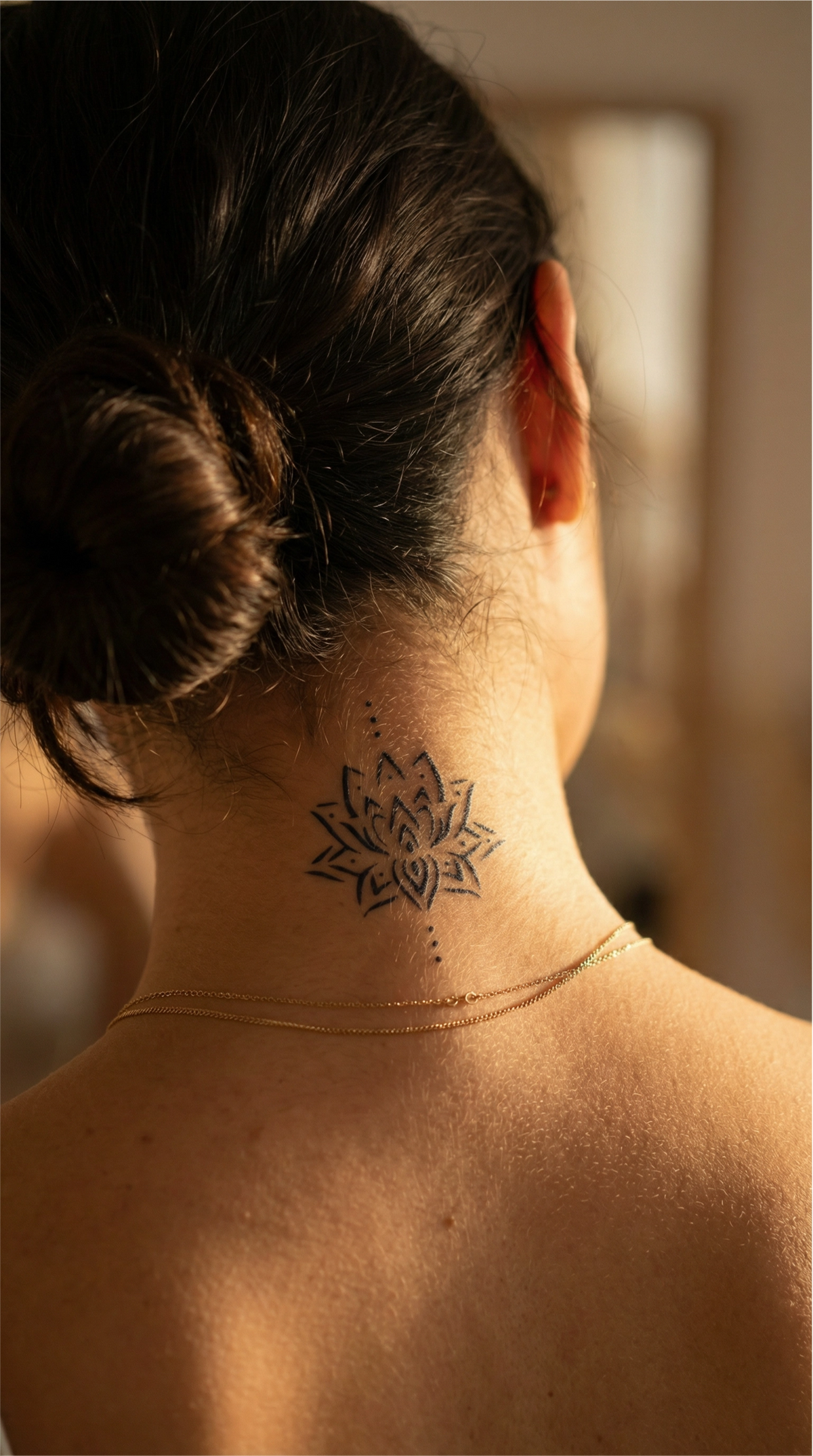

When you decide on a women's forearm tattoo, you are really making several smaller decisions at once: whether to choose the inner or outer arm, whether to go for a fine-line or bolder style, and whether you want a traditional motif that faces one way or a design that wraps around like a bracelet. This article goes through these considerations, shows how they look in practice with real InkLabs designs, and explains why it is worth trying out the placement and size with a temporary or semi-permanent version for a while before making a final decision.
If you are looking for ideas as a couple or together, the forearm tattoo design gallery for men can also offer inspiration, since many placement considerations—inner/outer arm, distance from the wrist—work similarly for both genders.
- The skin on the outer forearm is generally less sensitive than the skin on the inner arm, while the area near the wrist is more sensitive on both sides.
- Fine-line style comes from the thin needle, not the subject of the design, so it works best for small, detailed designs, while bolder lines are better where the design needs to be readable from a distance.
- A continuous or symmetrical motif has a bracelet-like effect when it runs around the cylindrical shape of the forearm, and its appearance changes as the arm moves.
- Sunlight fades a design over time, while how visible tattoos are viewed in the workplace depends on the role and workplace policies.
Inner or outer forearm: what to know before choosing a placement
Tattoo pain depends largely on which side you choose. The skin on the outer forearm is thicker and farther from blood vessels and tendons close to the surface than the skin on the inner arm, so experiences suggest that it is generally less sensitive (source: Tim Lease Tattoos). The forearm as a whole is also among the body areas with lower pain levels, making it a comfortable choice for a first tattoo (source: Healthline).
Why distance from the wrist matters
The area near the wrist is more sensitive on both sides than the middle of the forearm, because the skin is thinner here and the tendons run closer beneath it. If you are planning a larger composition, it is worth placing the more detailed, longer lines closer to the middle of the arm and leaving the area near the wrist for simpler, shorter elements.
Visibility is another consideration that can influence your decision. Both sides are visible in short sleeves, but the outer forearm is more often in view as you move—when shaking hands, typing or driving—while a watch or bracelet can more easily cover the inner arm when you need it to.
For example (not a real case, just an illustration): if someone works somewhere without a strict dress code and likes their design to be visible at first glance, the outer forearm is the more obvious choice because it combines less sensitive skin with greater visibility. If, on the other hand, someone wants the design mainly for themselves and those close to them, and expects to cover it sometimes, the inner forearm is a better fit for that idea, even though the skin there is more sensitive.
Fine-line or bolder style: how to choose
Fine-line style actually comes from the thin needle used to create the lines, not from the subject of the design: this produces the hair-thin, drawn effect that gives the style its name (source: Tattoodo). That is why a fine-line compass, cross or inscription can be just as detailed as a larger, bolder design, only at a smaller size. If you would like to learn more about the subject, our article about fine-line tattoos is a useful starting point, explaining the technique and the motifs associated with it in detail.
A bolder design, with thicker lines or more fill, is a good choice when the tattoo needs to be easy to read from a distance, for example with a larger, higher-contrast motif. The 
The two approaches are not mutually exclusive. Fine and bolder elements can easily sit side by side in a larger composition, as long as the designer thinks ahead about which parts need to stand out and which can remain more understated.
It is worth considering two specific questions when making your choice. The first is the distance from which the design needs to be clearly visible: fine lines work perfectly well for a detailed motif meant to be seen up close, while bolder lines are a safer choice for a shape that should be recognizable from a distance. The second is how many small details you want in the design: fine-line technique can accommodate a denser pattern and more intricate drawing on the same area than a more solid composition with thicker lines.
Bracelet-style designs that wrap around the forearm
A continuous-line or symmetrical motif, such as an infinity symbol, naturally fits the cylindrical shape of the forearm. When the design wraps around the limb, it has a bracelet-like effect and looks a little different from every angle as the arm moves.

Before choosing a design like this, it is worth thinking ahead about how it looks from different positions of the arm: from above, below and the side. This affects where the focal point should go, since a bracelet-style design rarely looks the same when the arm is at rest as it does when you raise or turn it. If you are considering a longer design planned for the whole forearm, our guide to choosing a size will help you decide how much space to set aside for it.
Bracelet-style placement also works well with fine-line motifs, because thin lines are less disrupted by the curve of the arm than a thicker, solid shape. If you had previously been thinking of a similar design wrapping around your upper arm or shoulder, that placement follows a different logic. We cover women's designs for the upper arm and shoulder in a separate article, in case that better suits your idea.
Sunlight, wear and the benefits of trying a design before finalizing it
With prolonged exposure to sunlight, a tattoo can fade over time and the skin's surface can also become cracked, so ongoing UV protection is part of standard tattoo aftercare, whether the design is temporary, semi-permanent or permanent (source: PMC).
How visible tattoos are viewed in the workplace depends on the role and workplace policies: some workplaces have no specific rules about them, while others restrict visible designs in certain positions or in customer-facing roles (source: Indeed). This can be another consideration when choosing between the inner and outer forearm, since the two sides are seen differently with everyday clothing.
In practice, this means it is worth thinking ahead about how important it is for the design to stay sharp for a long time, even after many sunny days, and how well it needs to fit a particular workplace's expectations. These are not obstacles, but considerations that help you narrow down which placement and size suit your everyday life.
Since so many considerations come together—side, style, layout and visibility—a practical step is to start with a temporary or semi-permanent design. This does not show you what a permanent tattoo would feel like, and it does not predict healing or a possible allergic reaction, either. Instead, it lets you see how the chosen placement and size look on your own skin for a few weeks before making any final decision. Our article about choosing your first tattoo explores the same approach in more detail.
If this step appeals to you, it is worth browsing the collection of temporary and semi-permanent designs for the forearm, where you will find designs like the ones shown above that suit both the inner and outer forearm.