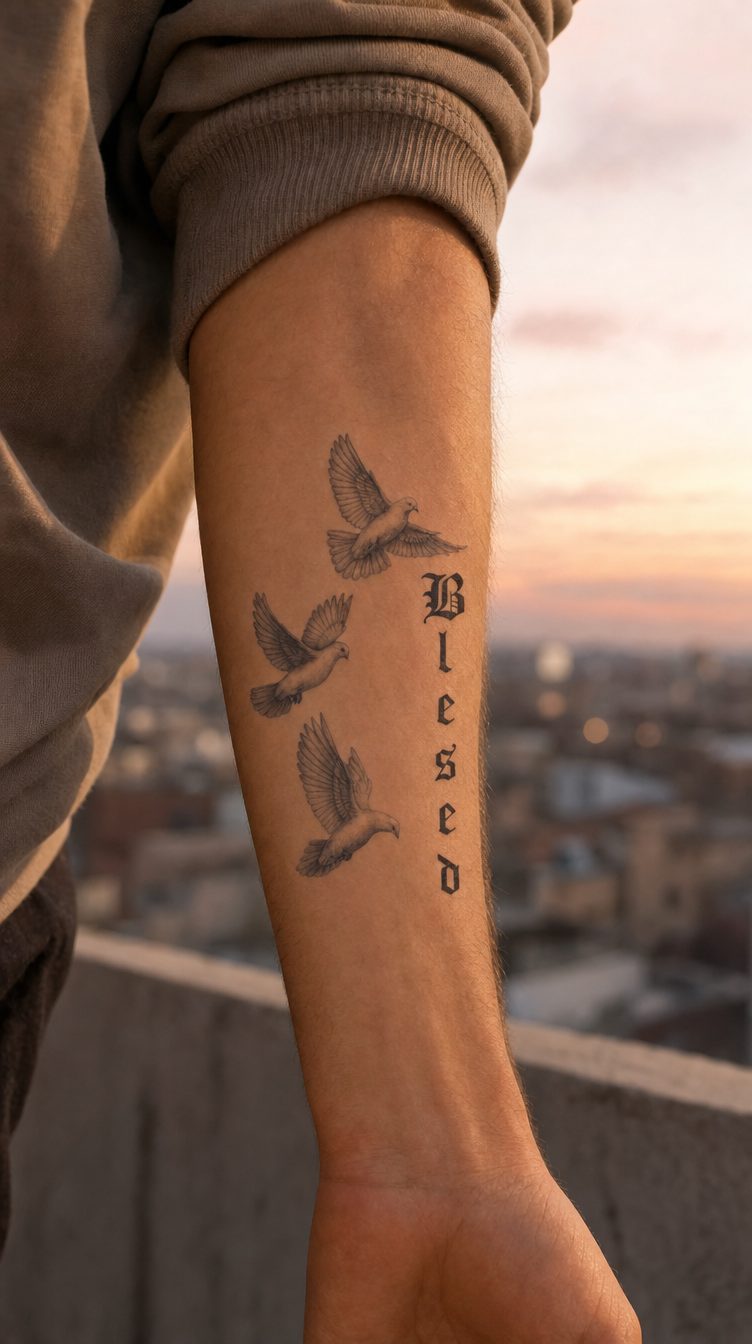

A tattoo that truly represents you usually doesn’t come from browsing a gallery of designs until something catches your eye; it comes from starting with something that really happened in your life - a moment, a value, an object, a place, or a relationship - and turning it into a simple shape that you would recognize as “you” even years from now. The exercises below help you do exactly that, step by step, before you think about size or placement.
Five short exercises, done in order, take you from a vague feeling to one specific motif you can test before it becomes permanent:
- A map of your life brings up three to five moments when something really changed, not necessarily the most dramatic event.
- Free association turns an abstract value, such as balance or direction, into a concrete visual shape you can draw.
- The objects you keep without a practical reason show what truly matters to you, beyond the vague label “sentimental object.”
- Places that changed your perspective can become an abstract symbol rather than a literal map, which loses its meaning if you move or change your mind.
- Important relationships can be represented by a gesture or a shared object, not necessarily by the other person’s face or initials.
Why a personal symbol lasts better than a trend
A design copied from a trend may still look good years later, but it has no connection to your story, so it doesn’t take on a deeper meaning over time - it remains exactly what it was on the day you chose it. People choose to get tattoos for various reasons: artistic, aesthetic, commemorative, spiritual, or related to belonging to a particular group (source: Tattoo - Wikipedia), and the tattoos that remain important over time are usually the ones connected to something you experienced yourself, not something you saw on a screen. Narrative identity theory partly explains why this works: people build their identity by integrating their life experiences into a coherent personal story that changes and develops over time (source: Narrative identity - Wikipedia). In other words, a symbol connected to your own story continues to mean something because the story itself continues to exist, even if the details around it fade.
The goal of the exercises below isn’t to come up with a design nobody else has; it’s to find one or two things from your life that a simple shape can truly represent. You don’t have to do all five exercises equally well - it’s enough if just one brings something clear to light.
Exercise 1: your life map
Draw a simple horizontal line on a sheet of paper, from your birth to the present, and mark three to five points where something really changed - a decision, a move, a loss, a new beginning. Writing makes you put into words something that would otherwise remain a vague feeling - as soon as you try to write a single sentence about a change, you notice whether you truly understood it or just felt it in passing, which is the practical reason this exercise works better on paper than just in your head. For each point on the map, write one sentence about what changed after that moment, not just what happened. When you reread the sentences, look for a recurring theme - a new beginning, a return, a choice you made for yourself - instead of automatically choosing the most dramatic event on the list; often, the recurring theme says more about who you are than one isolated moment.
What a simple map looks like in practice
You don’t need an elaborate drawing: a straight line with five marked points and one sentence written beneath each is enough for this exercise. If a particular word appears in several sentences - for example, “I chose” or “I gave up” - mark it separately; it’s often the raw material for a visual motif later, in the synthesis stage.
Exercise 2: word association
Set a short timer for two or three minutes and write, without stopping, the words that describe how you see yourself right now, as they come to mind. Then group the words into two or three themes and keep only the ones that still feel true the next day, after the exercise’s initial excitement has passed. The final step is to translate the chosen theme into a shape you can picture on your skin: direction easily becomes a compass, balance could become a star or a straight line on the horizon, and a connection with someone can be represented by two simple shapes linked together.

Exercise 3: objects that mattered
Write down two or three physical objects you would take with you in an emergency or still keep without any practical reason - a letter, a tool, an inherited piece of jewelry. For each one, write specifically why it matters instead of stopping at the vague label “it’s sentimental”; the specific reason is what later translates into a symbol, not the object itself. Then simplify the object to its outline or one defining detail - a complete, detailed illustration of a real object usually looks better as a photograph than as a small tattoo, where fine lines fade over time.
Exercise 4: places that shaped you
Think of a place that changed the way you see things, not necessarily where you come from, but a place where something in particular changed for you. Ask yourself what that place represents in a single word - freedom, refuge, ambition - rather than trying to depict the place itself in a drawing. An abstract icon, such as the outline of a mountain, a wave line, or a compass point, stays relevant longer than a literal map or a city skyline, which loses some of its meaning if you move or your feelings about that place change.
Exercise 5: the people you feel connected to
Name the relationship (not necessarily the person by name) that taught you a value you still carry with you - a parent, a close friend, a mentor. Ask yourself what that relationship taught you to do or notice, and look for a symbol for that lesson, not for the person’s face. A protective gesture, a shared object, or a motif made up of two linked shapes can represent a bond without relying on anyone’s face or initials - details that some people come to see differently years later.

From exercises to one simple motif
Set the five candidate ideas side by side and eliminate the ones that would need an explanation or a story told aloud for someone else to understand them - a good motif holds up without a caption. Choose a few clean lines over a scene crowded with details, because the design needs to work at the actual size of a tattoo and stay clear even after the lines soften over time. If two different exercises point to the same theme - for example, direction came up in both the word association and the places exercise - that is usually the strongest signal you have, not something you need to resolve by choosing just one of the options.
What a trial worn on your skin can confirm - and what it can’t
Once you’ve settled on one motif, it’s worth testing it before making it permanent, and a temporary or semi-permanent version is exactly right for this step. Worn for a few days during ordinary activities and with different clothes, the motif can show you whether it still feels “like you” on your skin, not just in your notebook. The trial can also confirm whether the size and placement you had in mind work with the way you normally move and dress.
What the trial can’t tell you is just as important: it doesn’t show you how a permanent tattoo session will feel, how your skin will heal, or whether you’ll feel the same way about that motif ten years from now - these remain separate questions that a temporary version isn’t designed to answer. If you want the full step-by-step protocol for a trial worn on your skin, the dedicated guide to testing a tattoo before making it permanent goes into detail about duration and how to monitor your skin’s reaction, while the article on what a temporary trial can and can’t confirm explores the exercise’s limitations in depth, beyond the question of whether the symbol still resonates with you. For specific figures on how long a trial like this lasts, depending on the type of ink used, the article about how long a semi-permanent tattoo lasts goes into exactly those details.
Once one motif clearly stands out from the rest, wearing a semi-permanent version for one or two weeks in everyday situations is an honest step before making the final decision. If you want to see a few starting points related to the themes that came up in your exercises, the symbols and quotes collection is a good place to start. For a broader overview of everything worth considering before getting a permanent tattoo, beyond choosing the symbol, the general guide to what you need to know before getting a permanent tattoo covers the next steps.