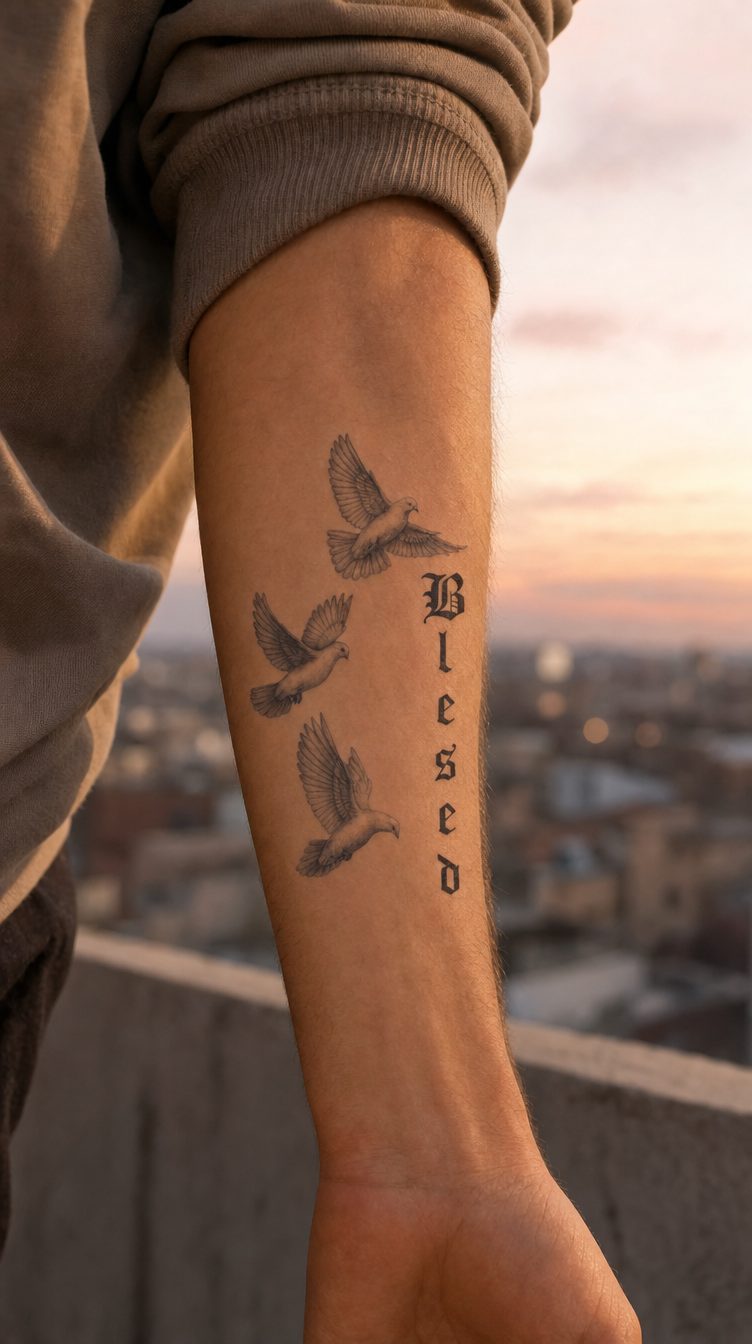

There is no single answer to the question of how much a small tattoo costs in Romania, because most studios do not charge based on the size of the design, but according to their own pricing model. Some calculate everything at an hourly rate, which also covers very small pieces, while others prefer to see the exact design, size, and placement on the body before giving you a figure. For this reason, two quotes for an apparently similar tattoo can be very different, without either being wrong — they simply come from different ways of calculating the price.
A few useful things to keep in mind before asking for a quote:
- There is no standard or regulated rate for a small tattoo in Romania; each studio sets its own way of calculating the price.
- The two most common models are an hourly rate (which covers a minimum amount of work) and a custom quote, given after the studio sees the exact design.
- Style, body placement, and the tattoo artist’s experience affect the price more than the actual size of the design.
- A deposit to confirm an appointment is common practice and is separate from the price of the tattoo itself.
Why the price of a small tattoo varies so much
A permanent tattoo is not a standardized product with a list price, like a mass-produced item of clothing, for example. Each studio operates as a small independent business, with its own costs for rent, sterile single-use materials, and the tattoo artist’s working time, all of which affect the final amount. The studio’s positioning — a central location, a reputation built over time, or a specialization in a particular style — can weigh just as heavily on the price as the design chosen by the client.
On the InkLabs blog, we have already explained the essential difference between a permanent tattoo, which usually costs hundreds or thousands of lei and stays forever, and an InkLabs semi-permanent tattoo, designed as a temporary way to try out a design. This article deals exclusively with the first category: what you pay when you choose a permanent tattoo at a studio in Romania, and why the amount varies so much from one studio to another.
How studios calculate their prices: hourly rate, minimum price, or quote
In practice, studios in Romania generally use one of two ways to set their prices. The first is an hourly rate, which also applies to very small pieces: even if a design measuring a few centimeters takes far less than a full hour, some studios charge a minimum close to one hour of work to cover preparation, sterilization, and consultation time. The second is a quote on request: the studio does not publish any fixed rates and sets the price only after seeing the exact design, size, and desired placement.
Regardless of the model, a deposit to confirm the appointment is separate from the final price of the tattoo. As a rule, this deposit is non-refundable if you cancel shortly before the appointment or do not show up, precisely because the studio reserves that time slot in advance.
A real example: what a studio rate in Bucharest looks like
To understand concretely how this kind of rate works, a real example, verified directly on the studio’s website, is useful — not an invented average estimate. Funky Tattoo, a studio in the Piața Romană area of Bucharest, publicly lists a rate starting at 250 RON per hour for most styles, including small pieces under 5 cm, and starting at 300 RON per hour for realism, color, cover-ups, 3D work, or areas such as the hand, neck, or chest (source: Tattoos — Funky Tattoo Studio). The same studio explicitly states that the final price depends on the size, complexity, and body placement, not just on the hourly rate listed as a starting point, and that confirming an appointment requires a 100 RON deposit, which is non-refundable in the event of a no-show or cancellation less than 48 hours in advance (source: Prices — Funky Tattoo Studio).
This is not the only pricing model you’ll find. 2ndFace Tattoo, another studio in Bucharest, in the Piața Unirii area, does not publish any fixed prices: when asked about the cost, its website explains that it depends on size, detail, style, placement, and the time required, and that the client receives a custom quote only after a consultation (source: 2ndFace Tattoo Studio). The figures above belong to these two specific studios in Bucharest and do not represent a national average; instead, they show what the two main ways of setting the price of a small tattoo look like in practice.

What makes a small tattoo more or less expensive
Even within the same pricing model, a few concrete factors can push the price of a small tattoo up or down:
- Style and technique. A simple fine line in black is usually charged at a lower hourly rate than a color tattoo, a realism piece, or a cover-up, because the latter require more working time and more experience from the tattoo artist.
- Body placement. Areas such as the hand, neck, or chest are often charged at a higher rate because the skin in these areas is more difficult to tattoo properly and requires more attention.
- The tattoo artist’s experience and demand. A highly sought-after tattoo artist or a studio specializing in a particular style may charge more for the same size design, precisely because their portfolio and bookings are more valuable.
- Size and level of detail still matter under any pricing model: a few extra centimeters of lines or shading mean additional working time, and time is ultimately what gets billed.
Why the city matters too — but isn’t the only factor
You can expect studios in large cities, where rents and demand are higher, to start at a higher base rate than studios in smaller cities, just as in other personal services. This observation remains a general pattern, however, not a fixed formula: a well-known studio in a smaller city may charge as much as a mid-range studio in the capital if it has a strong portfolio and high demand.
Because there is no public price map by city, the only reliable way to find out the actual price level in a particular city is to ask two or three local studios for a quote for the same design. The figures in the example above come from a single studio in Bucharest and should not be extrapolated as a typical price for other cities.
How to budget properly for your first small permanent tattoo
Once you understand that the price depends on the studio’s pricing model, you can ask the right questions before booking instead of relying on a single figure you found online:
- Ask directly whether the studio charges by the hour, has a fixed minimum price, or provides a custom quote for each design, and exactly what that price includes — drawing time, materials used, and any touch-ups.
- Ask for the deposit policy in writing before booking, because, as a rule, the deposit is non-refundable if you cancel close to the appointment date.
- Compare several quotes for the same design, the same size, and the same placement, not just the final figure, because a lower quote may actually cover fewer touch-ups or different materials.
Choosing a tattoo artist who is right for the style you want matters just as much as the price itself; if you want to know exactly what to check in a portfolio before booking, our guide to choosing a tattoo artist goes into those details.
Why a cheap tattoo can cost more in the long run
A permanent tattoo is, by definition, meant to stay on your skin for a lifetime, so its true cost includes how it will age over time, not just the amount paid on the day of the session. An underpriced or rushed piece is more likely to need a costly touch-up, rework, or, in more serious cases, a cover-up years later — and these additional sessions can easily cost more than the difference between the original quote and a somewhat higher one from someone with proven experience in that particular style.
The most common reason for this situation is choosing a studio based only on price, without checking the tattoo artist’s portfolio in the exact style you want. A low price for a style the tattoo artist does not handle as well as others often says more about that mismatch than about a genuine cost saving.
Before booking the permanent version, it makes sense to see exactly how the design, size, and placement look on your own skin first. The InkLabs collection for Your First Tattoo brings together semi-permanent designs created specifically for this kind of test, at a fraction of the cost of a permanent tattoo, and if you want the concrete steps for a test like this, we explain separately what a 14-day testing protocol looks like. If you want to return to the beginning of the decision — how to choose the right design and placement for your first tattoo — you’ll find the full context in our guide to your first tattoo, and if you’re wondering why it’s worth testing a design before making it permanent, regardless of your budget, we’ve explained the reasons in a separate article.