
A henna tattoo disappears on its own once the top, colored skin cells are naturally shed, and this process usually starts to become visible about two weeks after application. You can support it with gentle habits such as washing more often, applying oil briefly, and exfoliating lightly. Bleach or vigorous scrubbing, on the other hand, should be avoided because they irritate the skin without making the stain disappear noticeably faster. It is just as important to distinguish ordinary fading from an allergic reaction to so-called “black henna,” because the latter needs medical attention, not another round of home remedies.
- The dye lawsone bonds chemically with the keratin in the outermost layer of skin; the stain remains visible only as long as those colored cells stay on the skin.
- Washing, a brief application of oil, and gentle exfoliation after showering speed up this natural shedding process without putting extra strain on the skin.
- Bleach, aggressive scrubbing, or solvents harm the skin but do not actually make the stain fade faster.
- “Black henna” can contain PPD, which can trigger a lifelong allergy; if you notice signs of a reaction, seeking medical advice is a better idea than trying another home remedy.
If you are not sure whether your design is actually made with henna or is more like a stick-on temporary tattoo, this comparison of temporary tattoos and henna explains the difference. And if it is instead a semi-permanent InkLabs design that fades from the skin in a similar way, you can find the right care advice in the guide to gently removing a semi-permanent tattoo.
Why a henna tattoo fades in the first place
Henna does not dye the skin permanently; it lasts only as long as the colored skin cells remain on the surface. The dye responsible is lawsone, the namesake colorant in the henna plant: it forms a chemical bond with the keratin in the skin through what is known as a Michael addition (source: Wikipedia, Lawsone). This bond is found only in the outermost, already dead layer of skin, the stratum corneum. As these cells are shed during the normal skin renewal cycle, the color goes with them.
That is exactly why fading cannot really be forced; it can only be supported. According to the Cleveland Clinic, henna tattoos usually last about two weeks before they start to visibly fade (source: Cleveland Clinic). How quickly it happens in your case depends on how thick the skin is in the area and how often it renews there, for example, on the palm compared with the forearm.
Gentle methods that support natural fading
All effective methods work in the same way: they help the skin shed its own dead cells a little sooner, rather than chemically attacking the dye.
Cleanse and use oil instead of harsh products
Washing more often with a mild soap encourages the shedding that is already happening, just a little sooner. Applying a neutral oil such as coconut oil or baby oil to the area for about ten to twenty minutes also softens the colored cells without drying out the skin. For sensitive areas such as the face, micellar water is suitable because it cleanses the skin without irritating it (source: US Dermatology Partners).
Gently exfoliate after showering
Right after a warm shower, the skin is softer and can be exfoliated more easily and gently. A soft cloth or a mild exfoliant is quite enough; the aim is to remove skin cells that have already loosened, not to attack the skin underneath.
What only harms the skin without removing the stain faster
Some home remedies sound like a shortcut, but they only attack the skin without speeding up the process itself. Bleach is one of them: it significantly irritates the skin but does not dissolve the dye any more effectively than gentle exfoliation (source: US Dermatology Partners). Vigorous scrubbing or scratching is no more helpful; the source explicitly describes it as unnecessary and potentially dangerous because it can injure the skin without measurably speeding up fading. For the same reason, high-strength alcohol, nail polish remover, and other solvents should also be avoided: they damage the skin barrier without specifically targeting the dye itself.
Sticking to the gentle methods in the previous section does not mean losing time. The difference is not in the speed, but in keeping the skin intact rather than irritated by the end of the process.
Black henna: a different risk from an ordinary stain
An ordinary fading henna stain is not a health concern. So-called “black henna,” often offered at vacation spots or festivals to achieve a darker, instantly black result, is different. These mixtures are often darkened with PPD (para-phenylenediamine), a substance that is not approved for use on the skin in the EU and is intended solely for hair dyes (source: German Federal Institute for Risk Assessment, BfR).
The real risk is not the individual tattoo, but what can happen afterward: according to the BfR, anyone who has been sensitized to PPD once can remain allergic for life to PPD itself or to chemically related dyes. The US Food and Drug Administration also explicitly warns against “black henna” and points out that PPD can cause serious skin reactions and that henna is generally not approved for direct application to the skin (source: FDA). This does not mean that every dark henna tattoo is dangerous, but it is worth paying especially close attention to your skin if the result is unusually quick and deep black.
When patience is enough and when to involve a doctor
Ordinary fading happens evenly: the color gets lighter over days and weeks, without redness, swelling, or blisters spreading. Those additional signs are exactly when trying another home remedy is no longer a good idea. If redness spreads beyond the original design area, swelling or blisters appear, or the itching gets worse instead of easing, the Cleveland Clinic says you should seek medical care as soon as possible (source: Cleveland Clinic).
| Situation | What really helps | What only puts strain on the skin |
|---|---|---|
| You want the stain to fade a little faster | Wash more often with a mild cleanser, leave oil on briefly, gently exfoliate after showering | Bleach, vigorous scrubbing, alcohol, or acetone |
| Sensitive skin, e.g. on the face | Micellar water instead of harsh cleansers | Harsh cleansers or exfoliants with coarse particles |
| Redness, swelling, or blisters are spreading | Medical assessment | Trying another home remedy and waiting |
Try out a design idea without committing right away
While your henna stain fades on its own, the waiting period can also be a good time to try out another idea on your skin. A semi-permanent InkLabs design fades in the same way as henna because the color reaches only the upper layers of skin and fades along with natural skin renewal. This makes it a low-risk way to see a size and placement in real life before considering anything permanent. If you are generally interested in this topic, the guide to your first tattoo offers more detailed advice on design and placement.
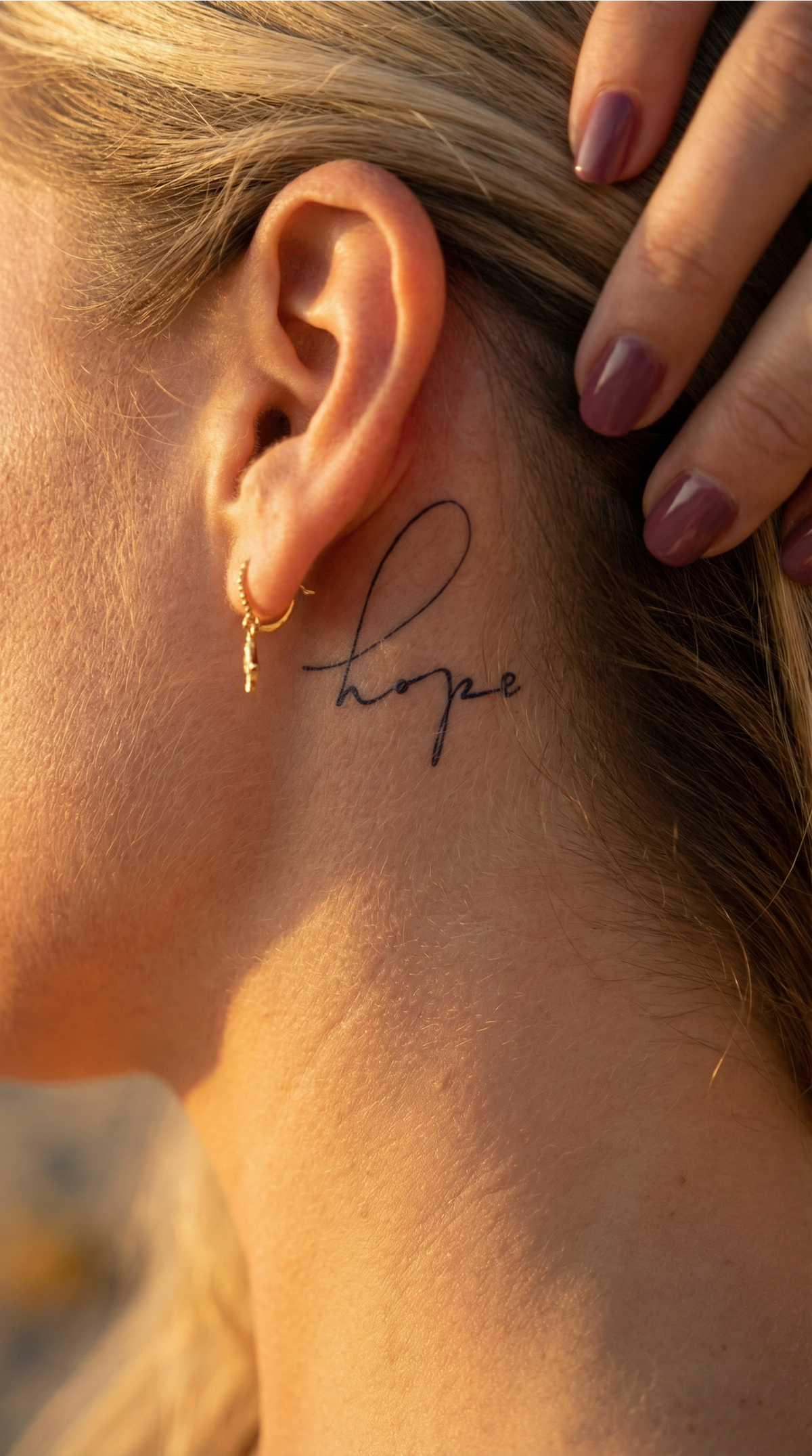
If what you like most about henna is its understated lettering, the design Hope captures that idea in a single, calm word.

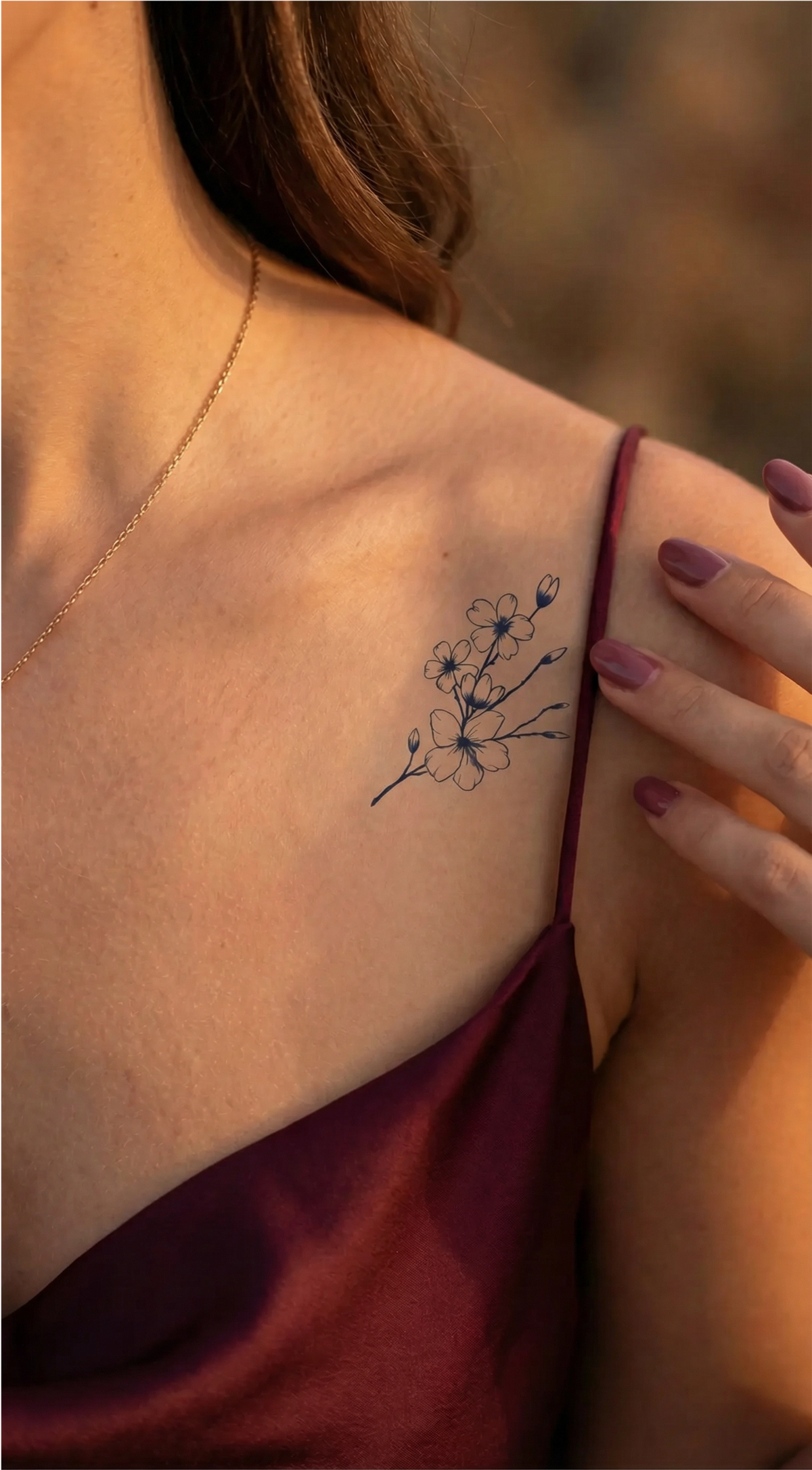
If you are more drawn to the floral, symbolic motifs that are also popular in henna, Lotus and Fish offers a comparable design in outline form. For more inspiration in this floral style, see the article on flower tattoos.

Both designs are part of the Semi-permanent tattoos collection, where you can compare more designs in different styles if neither of these is quite right.
In the end, the journey from the first henna stain to the last faint trace is the same as any natural skin renewal: it can be gently supported, but there is no point in forcing it. If you stick to mild methods and pay attention to your skin’s signals instead of burdening it with harsh products, you will get to the same result, just without additional irritation along the way.