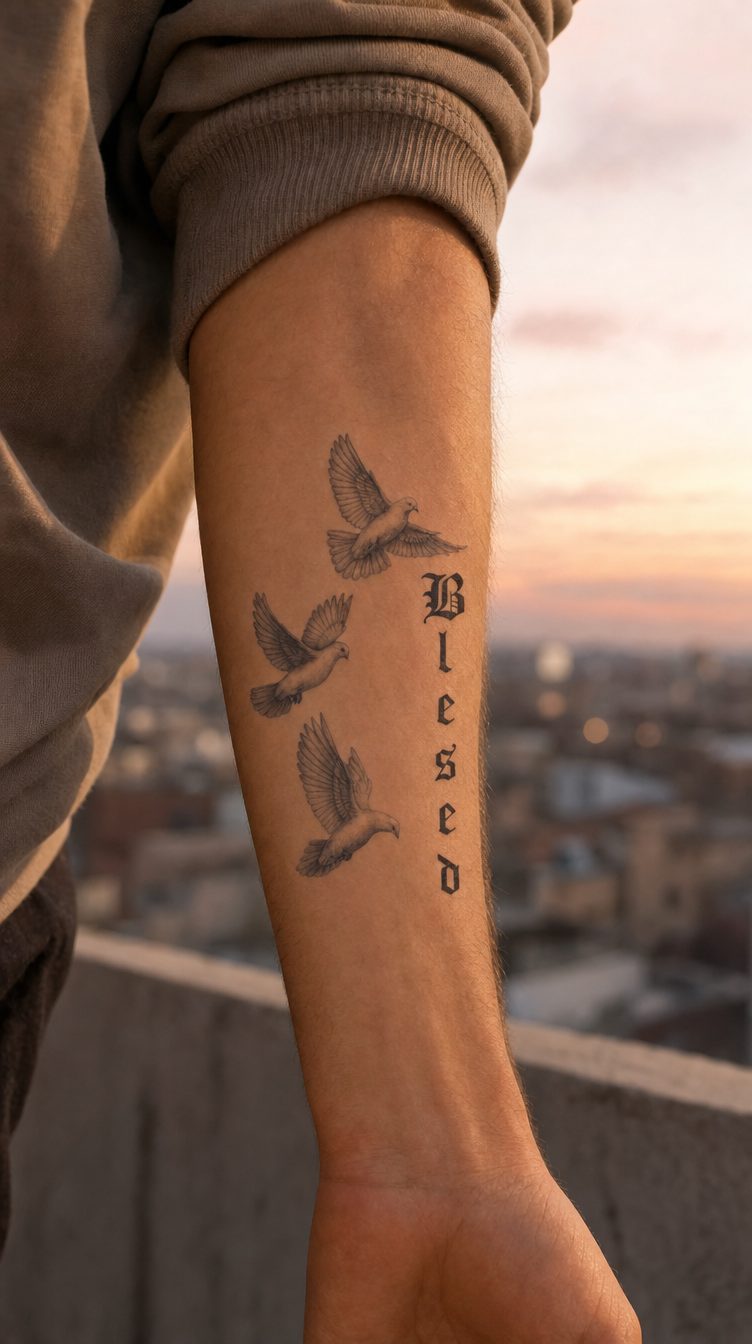

Yes, you can donate blood if you have a tattoo, but not necessarily right away: in Romania, tattoos are among the situations that can lead to a temporary deferral from donating, along with piercings, recent vaccinations, pregnancy or breastfeeding. The exact deferral period, in days or months, is not published in detail on the official page consulted for this article, so the safest option is to confirm your specific situation directly with the blood transfusion center before booking an appointment. Below, we explain why it matters whether the tattoo was done with a needle, what an Inklabs semi-permanent tattoo involves technically, and how to find out the exact period that currently applies to your situation.
- Permanent tattoos, done with a needle, can lead to a temporary deferral from blood donation, according to the Romanian Red Cross.
- The deferral is a time-limited safety measure set by medical staff, not a lifelong ban.
- The exact number of days or months must be confirmed directly with the transfusion center, not assumed based on an unofficial source.
- A semi-permanent design made without a needle is a technical product-related topic, separate from the question of donation eligibility.
Tattoos as a temporary contraindication to blood donation
According to the official page (source: Donate Blood – Romanian Red Cross), tattoos are listed among the situations that can lead to a temporary deferral from blood donation, along with vaccinations, pregnancy, breastfeeding or taking certain medications. A temporary deferral means that a donor may become eligible again once the period set by medical staff has passed, not that they will never be able to donate again. The same source explicitly recommends that you not rule yourself out on your own, but discuss any questions with the medical staff on the day of donation, because each donor is assessed individually according to their circumstances.
Why it matters whether the tattoo was done with a needle
What a permanent tattoo involves technically, in brief
Technically, a permanent tattoo involves repeatedly puncturing the skin with a needle down to the dermis, so the pigment stays there permanently. These punctures create a route through which infectious agents transmitted through blood can enter, regardless of how rigorously the studio follows hygiene rules and sterilizes its equipment. The donation deferral period exists precisely as a safety buffer for the period during which a possible infection would not yet be detectable by a standard laboratory test. This is a general precaution, not a diagnosis of your individual situation, which is why the final decision remains with the medical staff on the day of donation.
What an Inklabs semi-permanent tattoo is, technically
Unlike the permanent version, an Inklabs semi-permanent tattoo is applied using a plant-based gel that reacts with the proteins and keratin in the skin’s surface layer, and the pigment stays there without reaching the dermis as it does with a permanent tattoo (technical details in the Inklabs guide to semi-permanent tattoos). This is information about how the product works, not confirmation that this kind of design is treated differently under blood donation rules; that is something you still need to verify officially with the transfusion center for your situation.
How it is applied and how long it lasts
The color of an Inklabs semi-permanent tattoo gradually darkens over the first 24-36 hours after application, reaching a shade similar to that of a real tattoo. How long it lasts on the skin varies depending on the body area, friction and hydration; the Hope design, for example, lasts up to around 15 days.

How to find the exact deferral period that currently applies
The Romanian Red Cross page consulted for this article does not publish the exact number of days or months to wait after getting a tattoo, so any figure found elsewhere should be treated with caution, not as a fixed, universal rule. The safest step is to call or ask the blood transfusion center directly before booking an appointment, especially if you have recently had a tattoo. If you already have an appointment, discuss your situation with the medical staff on the day of donation instead of assuming you are eligible based only on unreliable information.
If you want to test a design before getting a permanent tattoo
Regardless of the topic of blood donation, a semi-permanent tattoo is useful for something else: seeing how a shape, size and placement look on your own skin before deciding on the permanent version. If you want to follow this step methodically, the 14-day body tattoo testing protocol explains exactly how to do it, while what a temporary tattoo can and cannot show you about a permanent one helps you understand the real limitations of a visual test, so you don’t draw the wrong conclusions about pain, healing or the final look. For general guidance on choosing the right design and placement for your first permanent tattoo, you can also consult the complete “Your First Tattoo” guide.
Frequently asked questions about tattoos and blood donation
Is donating blood after getting a tattoo permanently prohibited?
No. It is a temporary deferral, not a permanent ban. Once the period set by medical staff has passed, you may become eligible again, just as after other procedures that involve puncturing the skin.
Does an Inklabs semi-permanent tattoo exempt you from the deferral period?
There is no official confirmation of this at present. The fact that an Inklabs semi-permanent tattoo is applied without a needle is information about the product, useful for understanding how it works, but it does not replace an official answer from the transfusion center about your eligibility.
What should I do if I have a donation appointment right after getting a tattoo?
Call the transfusion center ahead of time and explain the situation exactly as it is: the date of the tattoo and what type it is. Medical staff decide on a case-by-case basis whether you can donate on the scheduled date or need to reschedule.
Conclusion
If you have recently had a tattoo and have a blood donation appointment, the simplest thing to do is call the transfusion center ahead of time and ask specifically about your situation, rather than assuming a general rule you found online. And if you simply want to see how a design looks on your own skin before getting a permanent tattoo, you can browse the Inklabs semi-permanent tattoo collection and choose a simple design; this guide explains in detail why it’s worth testing a tattoo before making it permanent.